Subscribe to newsletter
Subscribe to our newsletter and get updates on the newest posts we release.
By subscribing you agree to our Privacy Policy


Losing a key fob is one of those moments that instantly derails your day. Unlike a regular key, a fob is small, expensive to replace, and easy to overlook even in plain sight. Before you call a locksmith or panic-order a replacement, try this step-by-step approach — most people find theirs within 20 minutes.
The first thing to do is take a breath. Calm, structured recall almost always beats frantic searching, and there are a handful of simple checks that find the fob long before you ever need to spend money on a replacement.
Here are 7 steps to find a lost key fob — and exactly what to do if it turns out to be gone for good.
1. Stop, breathe, and retrace your last 24 hours

Panic is your biggest enemy here. The moment you realize your fob is missing, stand still and work backwards mentally: where were you when you last remember having it? Did you drive today? Did you unlock a door? Reconstruct the sequence before you move anything.
Research on how memory retrieval works confirms that calm, structured recall outperforms frantic searching — your brain consolidates spatial memories far better when you’re not flooded with stress hormones.
Work through these mental checkpoints:
- The last time you drove or unlocked your car
- Every bag or coat you’ve worn since
- Any time you paid for something and dug through your pockets
- Whether you came home with both hands busy — groceries, a child, or bags — since that often means the fob landed on the nearest surface
2. Check the most common “drop zones” first
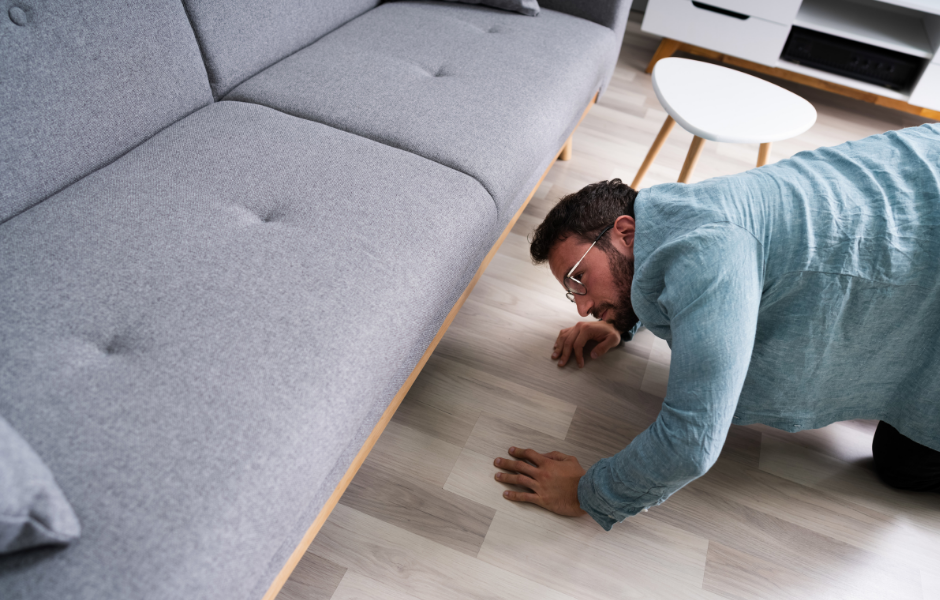
There are a handful of spots where key fobs end up almost every time. Work through this list before you start emptying drawers:
- The bowl, tray, or hook near your front or back door
- In between and under sofa or chair cushions
- On the kitchen counter, especially near the kettle or coffee maker
- In yesterday’s coat or jacket pocket
- The bathroom counter or windowsill (people set things down while washing hands)
- On top of the washing machine or dryer
- Your car’s center console, door pocket, or under the seat
If you have children or pets, also check low shelves, toy boxes, and under beds — fobs are irresistible to small hands and curious paws.
3. Try the signal test — press the panic button
If your fob is within range of the car (typically 30 to 100 feet depending on the model), pressing and holding the panic button will trigger your car’s horn and lights. This pinpoints not just whether it’s nearby, but roughly where.
Walk slowly around your home, garden, driveway, and any recently visited spots, pressing the button every few feet. If you hear your car respond, the fob is nearby. If you live in an apartment, open a window first so the sound can carry back in.
Note: if the fob battery is dead or very low, this won’t work — jump to Step 6.
4. Use a Bluetooth tracker app if you have one paired
If you previously attached an Apple AirTag, Samsung SmartTag, or Tile tracker to your fob, this is your fastest route. Open the companion app and use the “Find” or “Ring” feature to hear the tracker chirp from wherever it is.
These apps also show the last known GPS location, which is invaluable if the fob is in your car or somewhere you’ve already left. AirTags in particular have a Precision Finding feature (on iPhone 11 and newer) that uses Ultra-Wideband to guide you within centimeters.
Don’t have a tracker yet? After this ordeal, consider attaching one — it’s one of the cheapest insurance policies you can buy against future panic.
5. Expand your search to everywhere you’ve been

If the fob isn’t at home, think carefully about where else it might have been left behind:
- Work or school — a desk drawer, meeting room table, coat hook, or locker
- A friend’s or family member’s home — call and ask them to check near where you sat
- A café, restaurant, or shop — contact their lost property or visit in person
- A gym or sports facility — check with reception; fobs are among the most commonly handed-in items
- Public transport — contact the transit authority or bus company’s lost property office
File a report with any lost property service you contact — many items are reunited with their owners weeks later.
6. Replace the battery and retry the signal test
If you suspect the fob might be nearby but the panic button test isn’t working, a dead or dying battery is likely the culprit. Key fob batteries (most commonly CR2032) are inexpensive and widely available at supermarkets and hardware stores.
To replace the battery, most fobs have a small notch on the side — use a flathead screwdriver or a coin to gently pry the casing apart. Slot in the new battery, reassemble, and repeat Step 3. You may be surprised how often this resolves the issue.
Not sure which battery your fob takes? A quick search by your make and model will tell you the right size before you head to the store.
7. Do a methodical, room-by-room sweep
If nothing has worked, it’s time for a proper search. The key is to be systematic and avoid searching the same spot twice. Work through one room at a time and physically move things — don’t just look from above.
- Remove cushions and check under and inside upholstery
- Check inside bags, backpacks, and handbags — including interior pockets
- Look behind and under furniture
- Go through laundry you haven’t yet washed (fobs in washing machines are a very real problem)
- Check the fridge, freezer, or any cupboard you may have opened while carrying things
Use your phone’s flashlight and get low — fobs often slide under appliances, baseboards, and radiators where they’re invisible from standing height.
When the fob is truly gone: your options
If you’ve worked through all seven steps and come up empty, it’s time to accept the fob is lost and decide how to move forward. Here’s an honest breakdown of your options.
⚠ Security note: If you believe your fob was stolen rather than misplaced, contact your car manufacturer or a professional automotive locksmith immediately to have your vehicle’s access codes reprogrammed. A lost fob is an inconvenience; a stolen one is a security risk.
Option 1: Dealer replacement
Your car dealership can order and program a genuine OEM replacement. Convenient, but typically the most expensive option and often involves a wait of several days. Expect to pay $200–$500 or more depending on the vehicle.
Option 2: Automotive locksmith
An experienced locksmith can often cut and program a replacement fob on the same day, usually for significantly less than a dealer — with no appointment wait. Keyzoo offers same-day key fob replacement and programming for most makes and models.
Option 3: Online fob + local programming
Buy a compatible blank fob online and take it to a locksmith or auto electrician for programming. The lowest-cost route, but requires research and two separate steps. Total cost is typically $40–$150.
Option 4: Insurance claim
Some home insurance and auto insurance policies cover lost or stolen key fobs. Check your policy documents before paying out of pocket — but be aware of your deductible, as small claims may not be worth making.
How to make sure this never happens again
Once you’ve sorted your replacement fob, it’s worth putting a system in place. Here are the habits and tools that genuinely work.
- Designate a single spot. Every key, fob, and card goes in one place — a bowl by the door, a hook, or a drawer. No exceptions. The single biggest cause of lost keys is “I’ll just put it here for a second.”
- Attach a Bluetooth tracker. An AirTag or Tile Slim costs under $30 and clips neatly to most key rings.
- Get a spare cut and programmed. A spare fob stored safely at home means a lost fob is an inconvenience rather than a crisis. Keyzoo can cut and program spare fobs for most vehicles — often on the same day.
- Build a leaving routine. Before you leave the house, touch each item as you mentally confirm it: phone, wallet, keys. It sounds simple because it is — and it works.
Frequently asked questions
Can I drive my car without a key fob?
It depends on your vehicle. Most modern cars with push-button start require the fob to be present to start the engine, though many will let you drive until you next switch off. Some manufacturers build in an emergency override — check your owner’s manual for model-specific guidance.
How long does it take to get a replacement fob programmed?
A locksmith with the right equipment can typically program a new fob in 30–60 minutes on-site. Dealers may take several days if they need to order a part.
Will my insurance cover a lost key fob?
Many home insurance policies include key cover, and some auto policies include it as standard or as an add-on. It’s worth a quick call to your insurer before paying — just be aware of your deductible, as claims for small amounts may not be worth it.
Can a key fob be cloned?
Modern fobs use rolling encryption codes, making them very difficult to clone. However, older systems are more vulnerable. If security is a concern after a suspected theft, have your vehicle reprogrammed by a locksmith or dealer.
Need a replacement fob fast?
Keyzoo provides same-day key fob replacement and programming for most makes and models — at your home, office, or wherever you’re stranded. Contact Keyzoo for fast emergency locksmith assistance.